Turn every perturbation into a multidimensional map
See more from every CRISPR screen: morphology, protein localization, and transcriptomics, all from the same cell.
.png?width=1981&height=1311&name=Hero_Web_cell_CRISPR%20(1).png)
 |
Target discovery Uncover genes driving disease-relevant phenotypes at scale. |
 |
Target validation Confirm target function across molecular and cellular context. |
 |
Mechanism of action |
|
Genotype-to-phenotype linkage |
 |
Cell state and fate mapping |
|
Resistance mapping |


More readouts, more of the picture
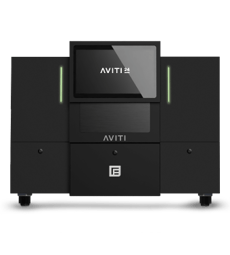
Most CRISPR screens provide a one-dimensional view of cell function. Cytos™ on AVITI24™ integrates transcriptomics, protein, and morphology to reveal how genetic perturbations reshape cellular biology — all on one automated platform.
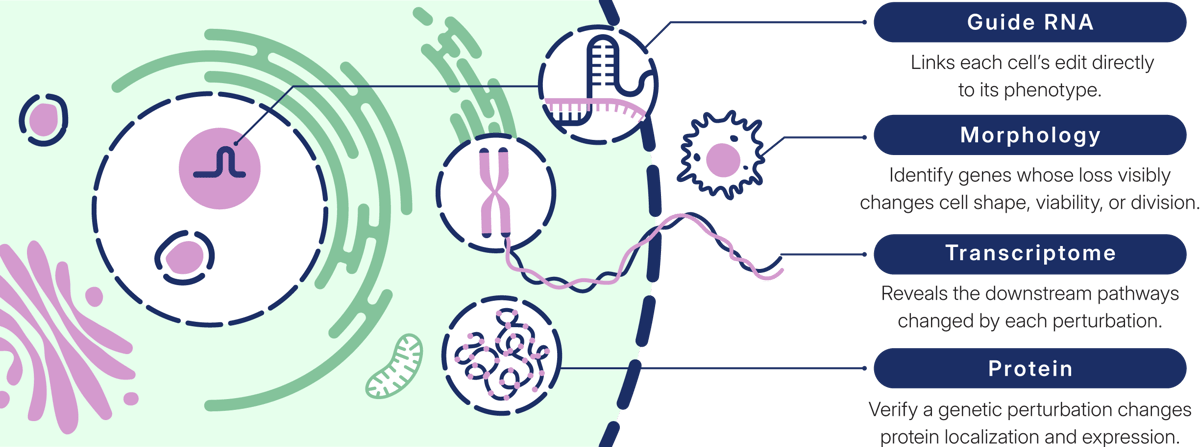
Cytos unlocks multimodal insights in one simple workflow
Validate each perturbation across morphology, protein, and transcriptomic response in the same cell, automatically, with no library prep.
 |
|
|
| Multimodal insights Validate each hit across morphology, protein, and transcriptomic response in the same cell. |
Simple, integrated workflow |
Accelerate screen to mechanism |


See the power of multimodal pooled screens with Cytos
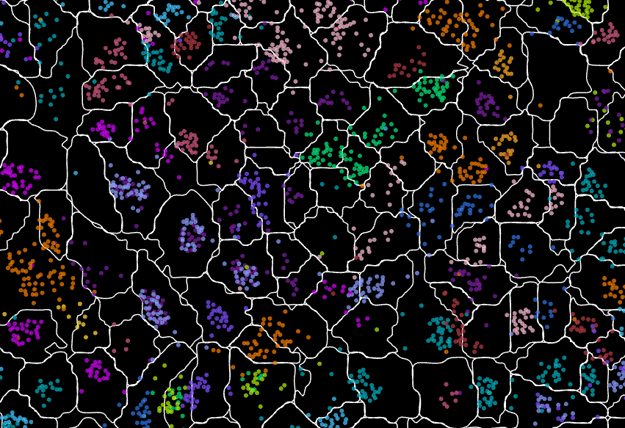 |
GUIDE DETECTION Confidently assign perturbations into single cellsDirect In Sample Sequencing resolves 10s–10,000s of guide RNAs directly in cells. Simply design a single primer pair for your guide library, add it to your Cytos cartridge, and let onboard base calling and cell assignment streamline analysis. |
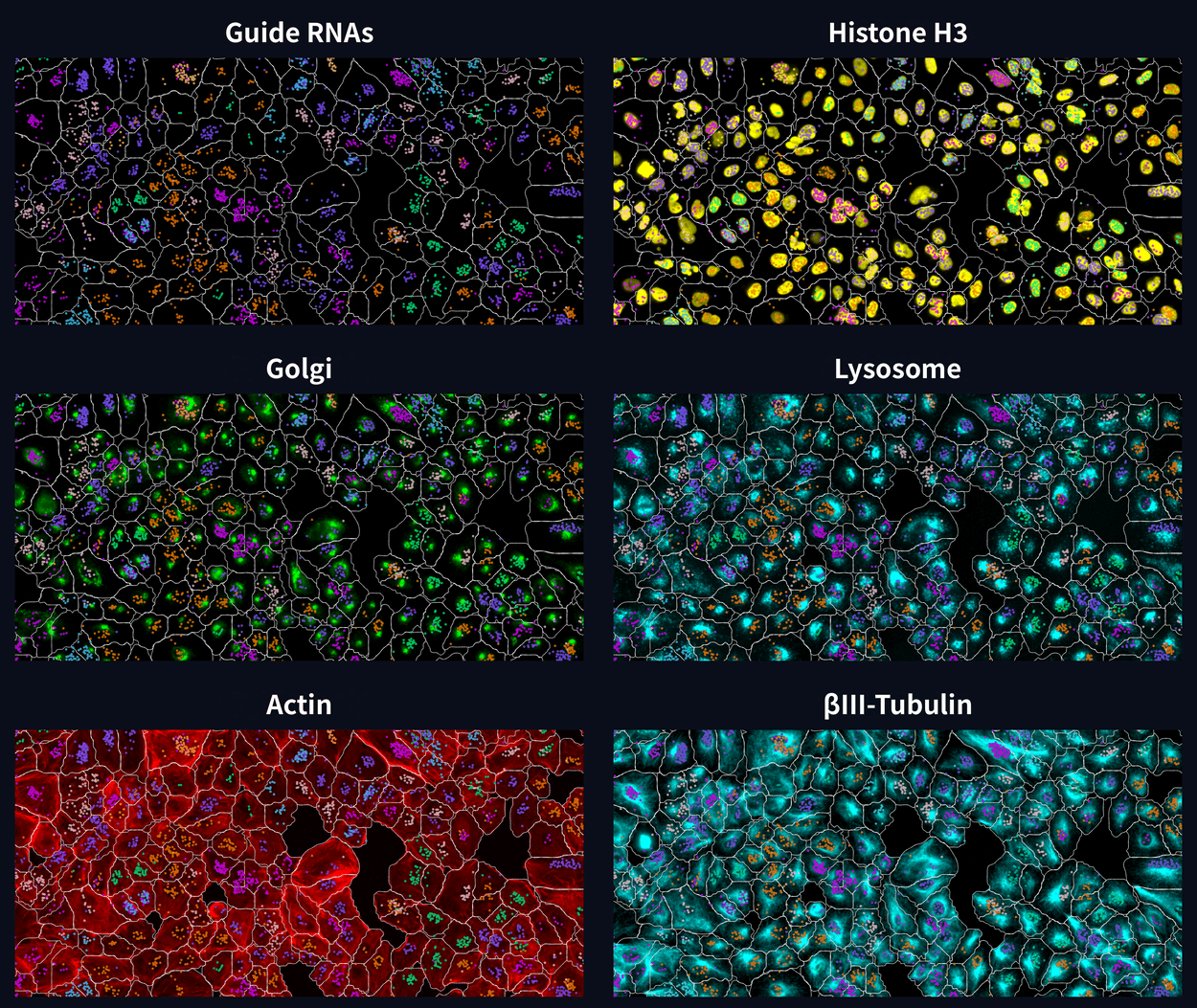 |
MORPHOLOGY Link genetic perturbations to mophological phenotypesProfile up to 24 subcellular structures with off-the-shelf and custom protein panels. Quantify morphology to reveal how perturbations reshape cell phenotype, from cytoskeletal reorganization to Golgi fragmentation. |
.jpg?width=625&height=393&name=17_tgfbr2_baseline_rna_volcano_black%20copy%20(1).jpg) |
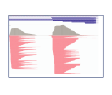
TRANSCRIPTOME Reveal transcriptome-wide effects of every perturbationDirect In Sample Sequencing unlocks 3’ transcriptome profiling to capture unbiased gene expression and reveal how each perturbation reshapes pathways, cell states, and broader transcriptional programs. |
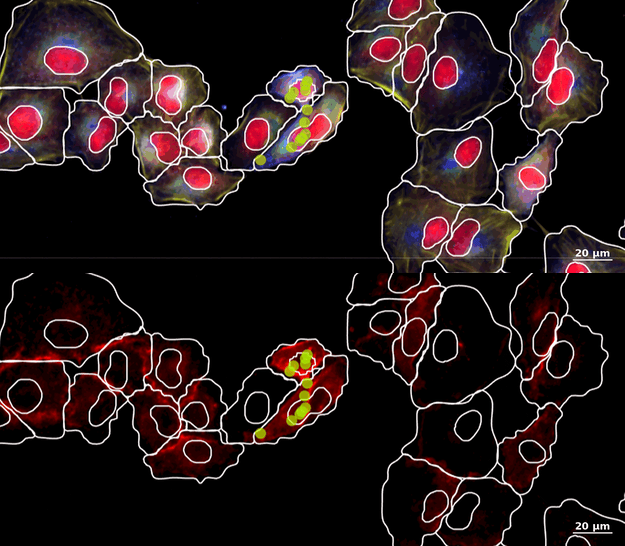 |
PROTEIN Visualize protein localization changesRich, multiplexed immunofluorescence-based protein read-outs reveals how genetic perturbations impact protein abundance, localization, and activation. |
From cells to answers
|
|
 |
 |
 |
 |
|
Introduce CRISPR library |
Culture and fix cells Culture cells directly on AVITI24 slides & perform fixation |
Image and sequence Onboard imaging, Direct in Sample Sequencing, & analysis |
Secondary analysis Automated secondary pipelines |
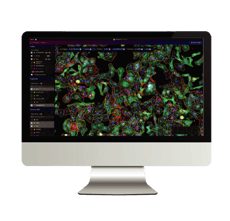
Visualize and interpret Multimodal visualization and downstream analysis |

Flexible workflows to power your CRISPR screen
Choose the biological depth your screen needs, from optical phenotyping to full multimodal profiling.
| Guide 10s-10ks gRNA |
Morphology 4-plex |
Protein 20-plex |
Transcriptome 3' poly-A |
|
| Cytos Optical Pooled Screening | ✔️ | ✔️ | ✔️ | |
| Cytos Multimodal Pooled Screening | ✔️ | ✔️ | ✔️ | ✔️ |
Get a full dataset
Explore the data from a multimodal pooled screen using Cytos on AVITI24.
.jpeg)
.png)